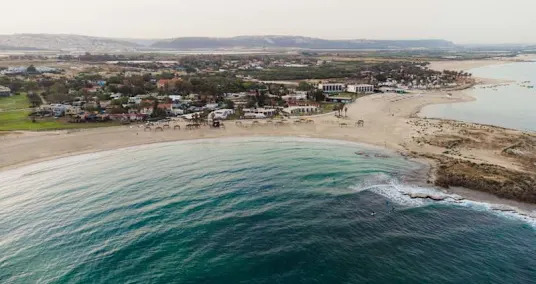
The discovery was made in an ancient shipwreck in the Dor Lagoon near the Carmel Coast, where archaeologists recovered nine pieces of unprocessed iron known as “blooms.”
Researchers from the University of Haifa said Wednesday that an underwater excavation off Israel’s northern Mediterranean coast uncovered what they described as the earliest known cargo of raw iron transported by ship, dating back around 2,600 years, Xinhua reported.
The discovery was made in an ancient shipwreck in the Dor Lagoon near the Carmel Coast, where archaeologists recovered nine pieces of unprocessed iron known as “blooms.” According to the university, the find provides direct evidence of how iron was transported in its earliest commercial stages.
The material was preserved in its original form, having solidified directly in a smelting furnace without undergoing forging or further refinement. Researchers said this distinguishes the cargo from later iron artifacts that typically show signs of shaping or tool-making.
Unlike copper and bronze, which could be melted into liquid form in ancient production processes, iron was heated with charcoal to produce a solid, porous mass. That mass was generally hammered to remove impurities and create denser material suitable for tools and implements.
The recovered blooms showed no indication of that secondary processing stage, suggesting they were transported immediately after production.

Earliest iron shipment discovered in ancient Mediterranean wreck
To determine the age and condition of the cargo, researchers conducted microscopic and chemical analyses.
Radiocarbon dating was also carried out on charred wood embedded in one of the pieces, helping confirm the timeline of the shipment. The findings were published in the journal Heritage Science.
Researchers said the cargo indicates that iron was being moved in raw form from production sites to other locations for further processing, pointing to a level of specialization in ancient manufacturing and trade networks in the Mediterranean.
The University of Haifa said the discovery provides new insight into early iron production and distribution practices in the region.
LATEST POSTS
- 1
 From Dread to Certainty: Individual Accounts of Strengthening
 - 2Pick Your Favored kind of sandwich
- 3How we came to be: Scientists get first look at the evolution of early complex animals
- 4The Incomparable Advanced cameras: Which One Will Win?
- 5Merck urges science-led US vaccine schedule after CDC trims childhood vaccine list




- Cells have more mini ‘organs’ than researchers thought − unbound by membranes, these rogue organelles challenge biology’s fundamentals
- At least 36 dead in major fire in Hong Kong residential blocks
- War in Iran could exacerbate German housing crisis, minister warns
- Savvy Cleaning: The 6 Robot Vacuums of 2024
- Fake new headlights rule steer Australian drivers astray
- Hezbollah sees potential win as Israel backs down from disarmament goal
- Europe pledges over €15bn for clean energy for Africa
- The most effective method to Promoter for Cellular breakdown in the lungs Mindfulness in Your People group
- 5 Breakout Stars in Ongoing television Series