When you buy through links on our articles, Future and its syndication partners may earn a commission.

On Wednesday (April 1), NASA launched its history-making Artemis 2 mission, which will see humanity return to the vicinity of the moon for the first time in over half a century. Not only this, but Artemis 2 will carry humans farther into space than they have ever ventured before.
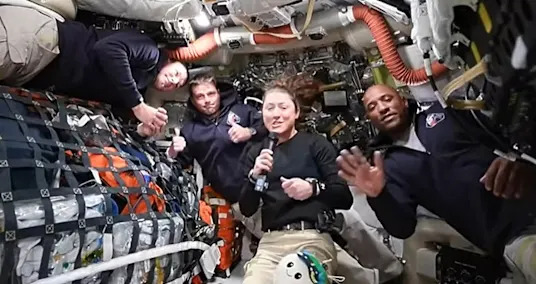
The Artemis 2 mission launched at 6:35 p.m. EDT (2235 GMT) atop the massive Space Launch System rocket from NASA's Kennedy Space Center, sending the Orion space capsule on a trajectory that will see astronauts Victor Glover, Christina Koch, Reid Wiseman and Jeremy Hansen fly a historic 10-day voyage around the moon and back.
As is fitting for such an important event in science history, the launch was captured from a multitude of views in stunning images that immortalize this giant leap for humanity. Want to preserve this historic moment in human spaceflight history? Check out our Artemis 2 gift guide to find the perfect gift for the space fan in your life — or yourself.
Every rocket launch begins with a waiting game. The SLS was rolled out to the historic Launch Pad 39B on March 19 at around 8 p.m. EDT (0000 GMT on March 20), for an agonizing 12-day wait.

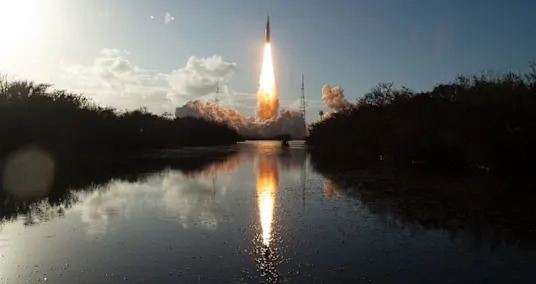
Finally, the moment of anticipation arrived with the SLS launching NASA's Reid Wiseman, Victor Glover, Christina Koch, and Jeremy Hansen of the Canadian Space Agency to space. The image below beautifully illustrates the sheer power required to get the four-person crew beyond Earth.

The launch was impressive even from close to 3 miles (5 kilometers) away at the Kennedy Space Center press site.

Space.com's Josh Dinner captured this stunning photograph of the Artemis 2 launch from Kennedy Space Center, Florida.

The sheer power of SLS is plain to see in this shot from the press site, framed by the American and Artemis program flags.

NASA photographer Joel Kowsky captured the plume of fire spewing from SLS as it reflected in the waters surrounding Kennedy Space Center shortly after liftoff.

The image below shows the SLS freeing itself of Earth, hauling the Artemis 2 mission to the darkening skies above Florida.

Finally, the crew of Artemis 2 are well on the way to becoming the first humans to venture to the vicinity of the moon since the Apollo 17 crew in 1972.

Photographers were able to witness the SLS side boosters separate from its core stage shortly after the launch of Artemis 2.

Artemis 2 drew huge crowds to Florida's Space Coast. Hopeful onlookers lined bridges and other viewing areas throughout the region to see the launch in person.

NASA's Kennedy Space Center Visitor's Center was sold out for the event, so crowds lined every available viewing spot throughout the Space Coast.

Stay updated with the latest news about the historic mission with our Artemis 2 live blog. You can also watch the Orion spacecraft on its journey with a live telescope webcast tonight (April 2).
LATEST POSTS
- 1
 Toyota’s Next Big Sports Car Might Apparently Be a Turbocharged All-Paw Beast
 - 2New dinosaur tracks in Italy illustrate herds moving in unison
- 3Governments take targeted action as fuel prices hit retail
- 4More than 800 flights canceled as FAA cuts traffic at 40 major airports. Here's what to know.
- 5The Main 15 Applications for Efficiency and Association



- What to know about the "wild, wild West" of viral peptide claims
- CDC vaccine panel votes to remove universal hepatitis B birth dose recommendation
- 7 Powerful Techniques to Boost Efficiency with Your Cell Phone: A Far reaching Guide
- Find the Advantages of Innovative Leisure activities: Supporting Creative mind and Self-Articulation
- 'Not the moon that I'm used to seeing': Artemis II astronauts describe seeing the far side
- Most loved Road Food: Which One Prevails upon You?
- Washington state experiences historic flooding as Skagit River hits record high level. See flooding maps, highway closures and forecasts.
- Flu season is underway. What are common symptoms to watch for?
- Old video misrepresented as senior Sri Lankan ruling party member criticising president over fuel shortage