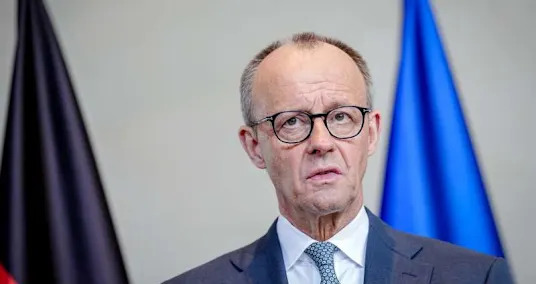
German Chancellor Friedrich Merz has said that 80% of the more than 900,000 Syrian nationals in Germany should return to their home country in the next three years.
At a press conference with Syria's interim President Ahmed al-Sharaa in Berlin on Monday, Merz said the leaders agreed that over the "longer term of the next three years," around "80% of the Syrians currently in Germany should return to their homeland."
"That was also the wish of President Sharaa," Merz said, adding that "those Syrians who wish to remain in Germany and are well integrated will be able to stay in Germany."
Germany was one of the main destinations for Syrian refugees fleeing the devastating civil war, with around 1 million arriving in the country during dictator Bashar al-Assad's time in power.
Calls for Syrian nationals to leave Germany have risen in conservative and far-right circles following al-Assad's ousting in late 2024 by an Islamist coalition led by al-Sharaa.
LATEST POSTS
- 1
 Timothy Busfield turns himself in to face child sexual abuse charges in New Mexico
 - 2The cheap health insurance promoted by Trump officials has this catch
- 3NASA study shows how satellite 'light pollution' hinders space telescopes
- 4Hubble Space Telescope spies dusty debris from two cosmic collisions
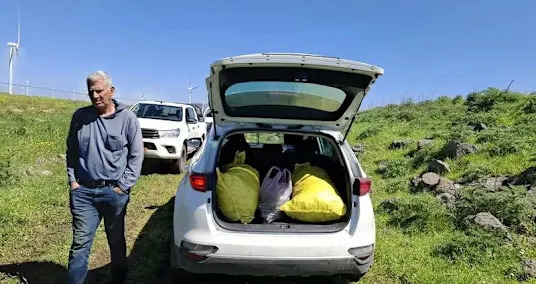
- 5Hundreds of kilos of protected plant seized by Israel Nature and Parks Authority in Golan


- Scientists find new clues to why female fertility declines with age
- Aspirin can prevent a serious pregnancy complication — but too few women get it, new report suggests
- Idris Elba is the king of the stress-watch
- Former biotech CEO sued over COVID vaccine alleged insider trading
- Former 'Bachelorette' welcomes 1st baby via emergency c-section
- The Solution to Innovative Peculiarity: Analyzing the Fate of Mankind
- NASA’s history-making moon mission aims to send the first woman and person of color to deep space
- Tehran synagogue damaged by missile strike according to Iranian media
- Cyber Monday 2025 streaming deal: Get $42 off six months of Apple TV